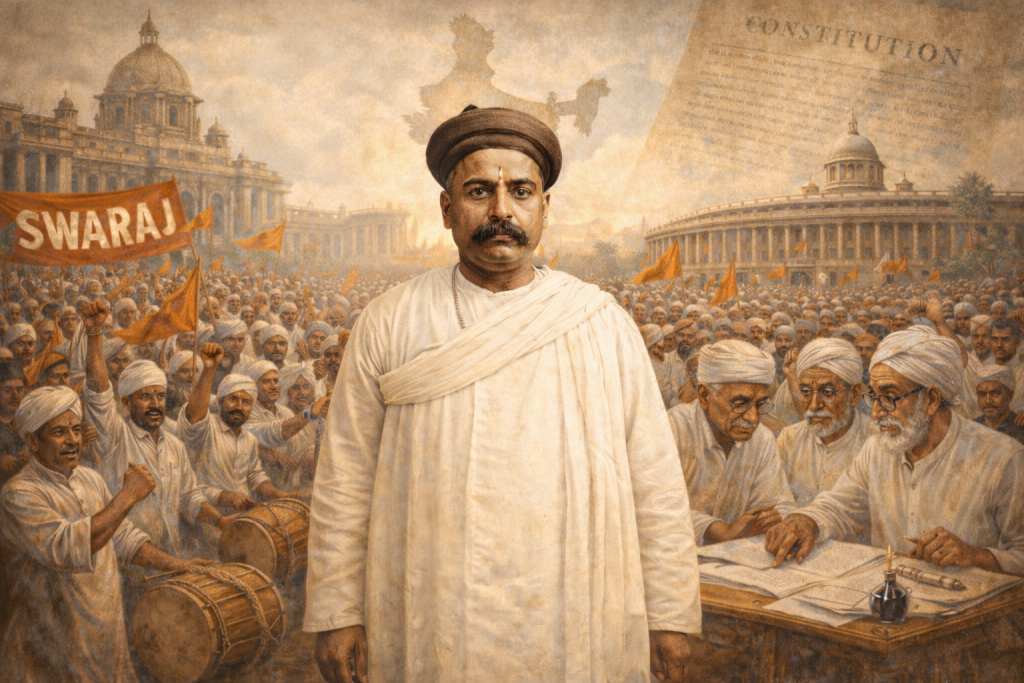
Swaraj Philosophy
- Home
- Philosophy
Meaning of Swaraj
Swaraj means complete freedom and self-governance where people control their political, economic, and social destiny without foreign rule.
Swaraj, meaning Self-Rule, represents the fundamental idea that a nation must govern itself without dependence on external powers. For Bal Gangadhar Tilak, Swaraj was not just political independence but the empowerment of every individual to participate in the decision-making process of the country. It emphasized responsibility, discipline, and unity to build a strong self-reliant society.
Tilak believed that true Swaraj begins with self-control, social reform, and education that awakens national consciousness. It included economic freedom, cultural pride, and the determination to shape India’s future with dignity. His declaration “Swaraj is my birthright and I shall have it” transformed the dream of independence into a mass movement and laid the foundation for India’s ultimate freedom struggle.
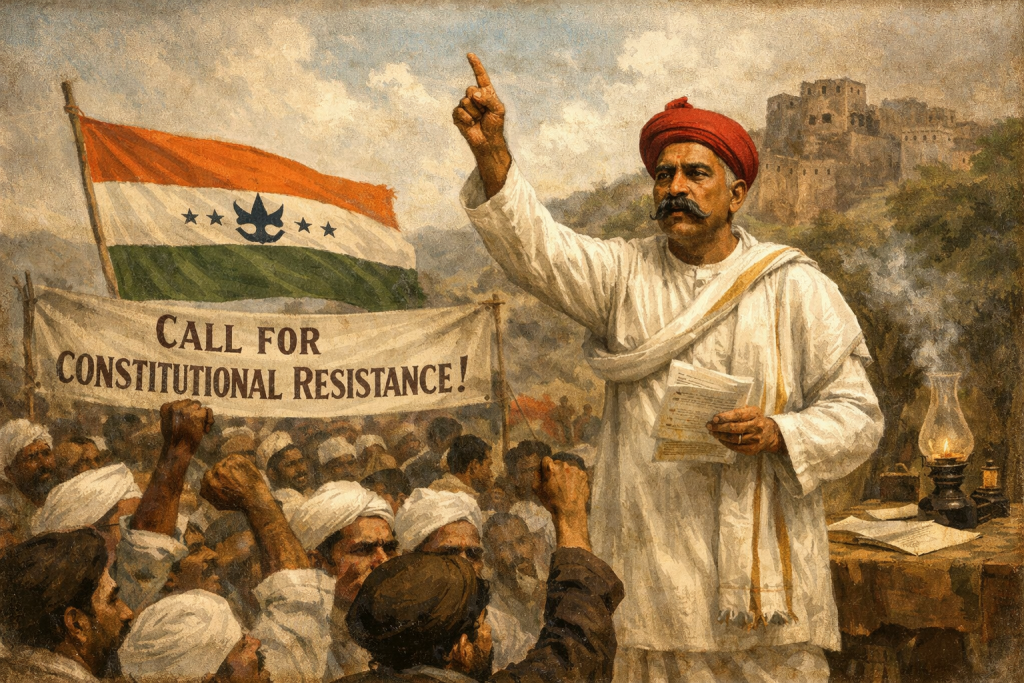
Call for Constitutional Resistancej
Tilak urged Indians to resist unjust colonial laws through organized, lawful, and disciplined struggle to assert national rights and dignity.

Bal Gangadhar Tilak strongly advocated for Constitutional Resistance as a strategic response to British oppression. He encouraged Indians to oppose unjust laws not through violence, but through peaceful, organized, and legal defiance. According to Tilak, passive suffering was not patriotism; true patriotism demanded courageous action guided by discipline and unity.
He believed that rights were never granted willingly—they had to be demanded through persistent pressure and collective mobilization. Tilak’s call inspired people to protest discriminatory policies, boycott foreign goods, assert civil liberties, and participate in national movements with responsibility and determination. His philosophy became the moral base of later campaigns by Mahatma Gandhi, such as Non-Cooperation and Civil Disobedience, strengthening India’s fight for freedom through lawful resistance.
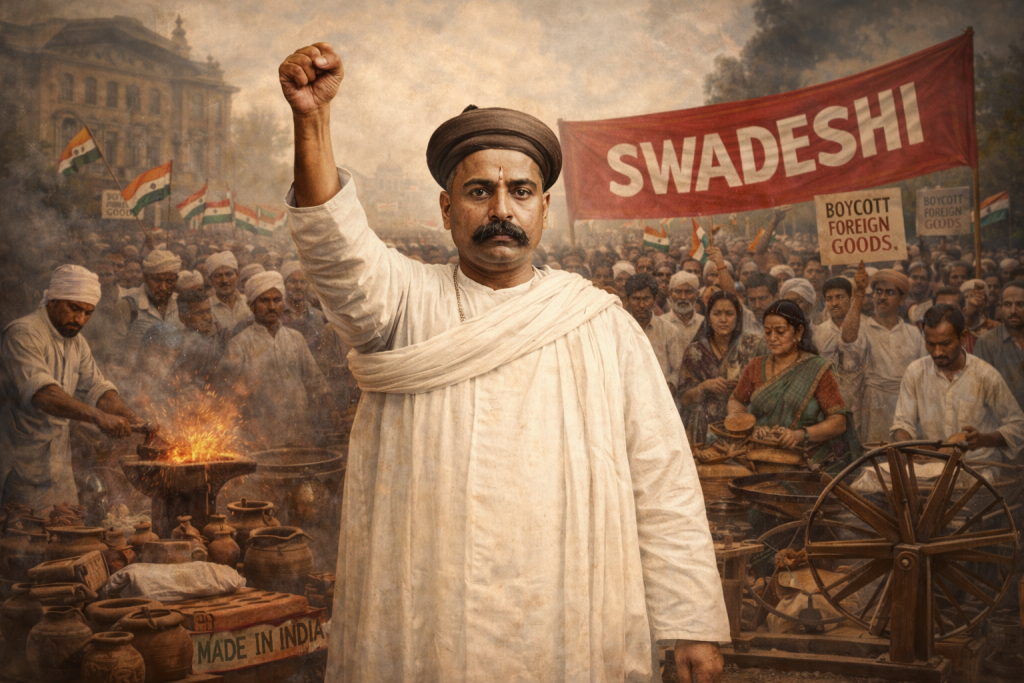
Economic Nationalism
Tilak promoted economic self-reliance, Swadeshi production, and boycott of foreign goods to weaken British control and strengthen India’s economy.
Bal Gangadhar Tilak emphasized Economic Nationalism as a core strategy for achieving India’s freedom. He believed that political independence would be impossible without economic self-reliance. Under British rule, India’s economy was drained through unfair taxes, destruction of local industries, and forced imports of foreign goods. Tilak encouraged people to reject British products and instead support Swadeshi manufacturing, indigenous enterprises, and Indian craftsmanship, ensuring that wealth remained within the country.
Tilak organized public campaigns, speeches, and community movements that inspired millions to burn foreign cloth, promote handlooms, and start Indian businesses. His approach created economic awareness at the grassroots level and united people from all classes. Economic Nationalism became a powerful weapon against colonial domination and laid the foundation for national industrial growth after independence.
Cultural & Spiritual Nationalism
Tilak promoted nationalism rooted in India’s cultural identity and spiritual heritage to unite people emotionally, morally, and intellectually against colonial domination.
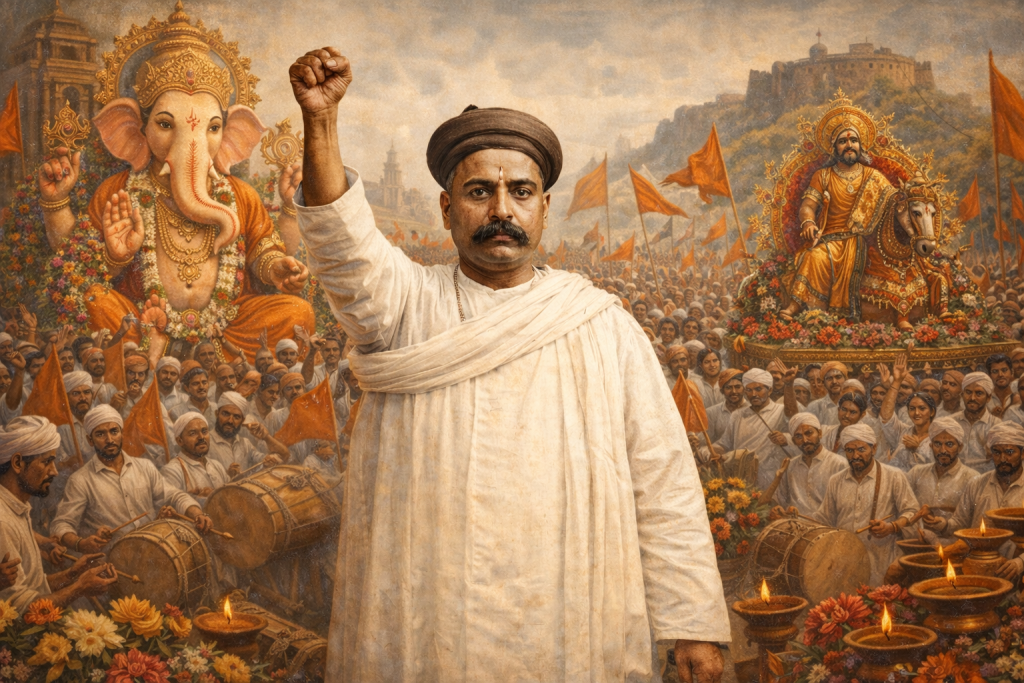
Bal Gangadhar Tilak believed that India’s strength lay not only in political power but in its cultural unity and spiritual heritage. He argued that a nation is built on shared traditions, beliefs, and values that inspire collective pride and courage. Tilak used festivals like Ganesh Utsav and Shivaji Jayanti to awaken national consciousness, turning cultural celebrations into platforms for political unity and resistance.
For Tilak, spirituality did not mean withdrawal from society—it meant fearless duty and selfless service. By interpreting the Bhagavad Gita as a call to action, he taught that spiritual strength must guide national struggle. His idea of Cultural & Spiritual Nationalism empowered people to fight for freedom with dignity and emotional solidarity, creating a unifying force stronger than fear of oppression.
Political Thought & Vision for Free India
Tilak envisioned a free India built on self-rule, civil rights, mass participation, economic strength, and national unity beyond caste and religion.
Bal Gangadhar Tilak’s political thought shaped the intellectual foundation of India’s freedom movement. He firmly believed that Swaraj—self-government—was the natural right of every Indian and could only be achieved through fearless struggle and public participation. His vision for free India included a democratic system where citizens held real power, protected by constitutional rights and an accountable government.
Tilak advocated for national education, economic self-reliance, and unity across all communities, rejecting divisions created by British policies. He stressed that social reform and political freedom must progress together to build a strong nation. Tilak inspired people to rise with courage and discipline, declaring that freedom was essential for human dignity. His ideas influenced future leaders and shaped India’s path to independence and nation-building.