
Modern Relevance & Inspiration
- Home
- Inspiration
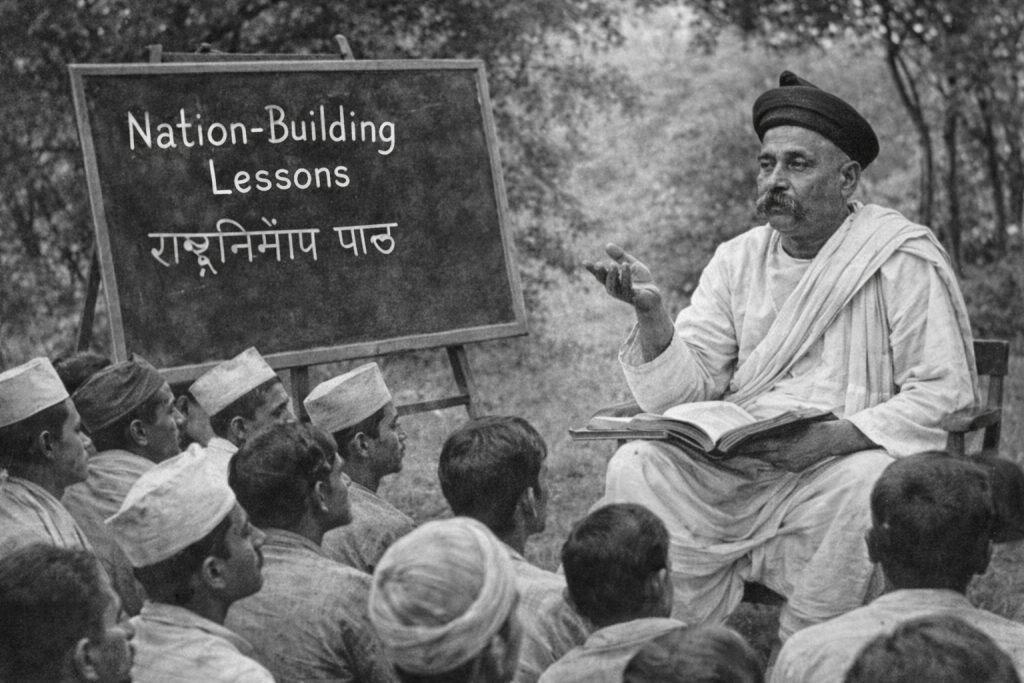
Nation-Building Lessons
Tilak inspired students to lead with discipline, courage, service, and intellectual strength, shaping responsible youth leadership at the heart of nation-building.
Lokmanya Bal Gangadhar Tilak believed that students were the torchbearers of national transformation. He encouraged youth to cultivate discipline, courage, intellectual curiosity, and a deep sense of duty toward society. Tilak insisted that education must go beyond academic success and inspire character-building, moral responsibility, and active participation in public life.
He promoted independent thinking and leadership through debate, public speaking, national education initiatives, and community service. Tilak viewed students as future leaders capable of uniting society, challenging injustice, and shaping India’s destiny with integrity and fearless determination.
Model for Student Leadership
Tilak’s teachings inspire national unity, disciplined citizenship, self-reliance, and active public participation as foundations for building a strong, independent nation.
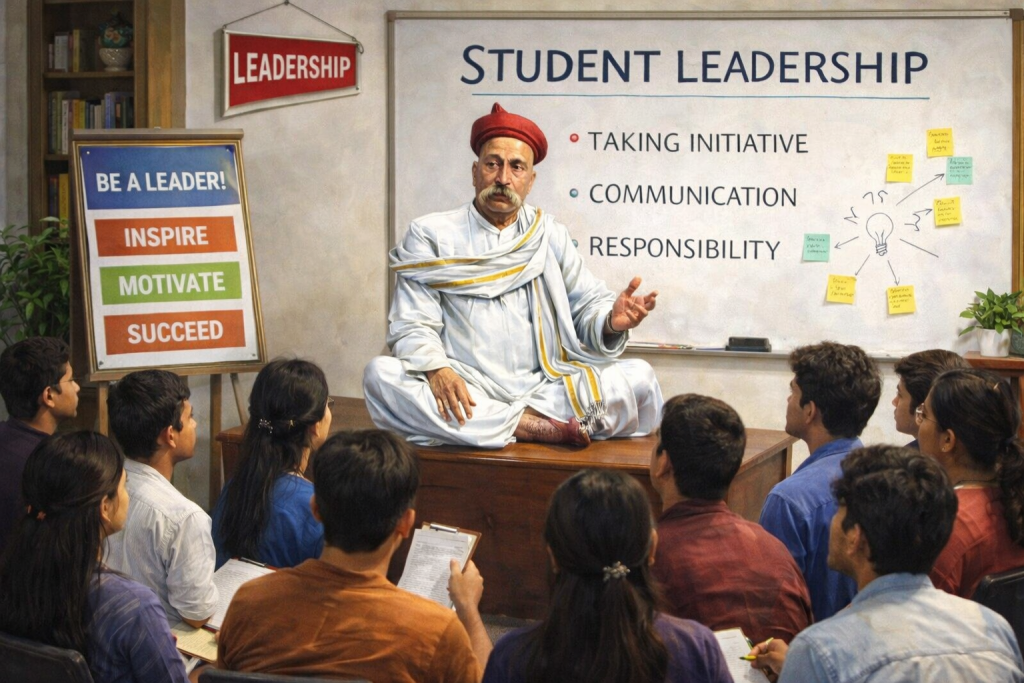
Lokmanya Bal Gangadhar Tilak believed that students were the torchbearers of national transformation. He encouraged youth to cultivate discipline, courage, intellectual curiosity, and a deep sense of duty toward society. Tilak insisted that education must go beyond academic success and inspire character-building, moral responsibility, and active participation in public life.
He promoted independent thinking and leadership through debate, public speaking, national education initiatives, and community service. Tilak viewed students as future leaders capable of uniting society, challenging injustice, and shaping India’s destiny with integrity and fearless determination.
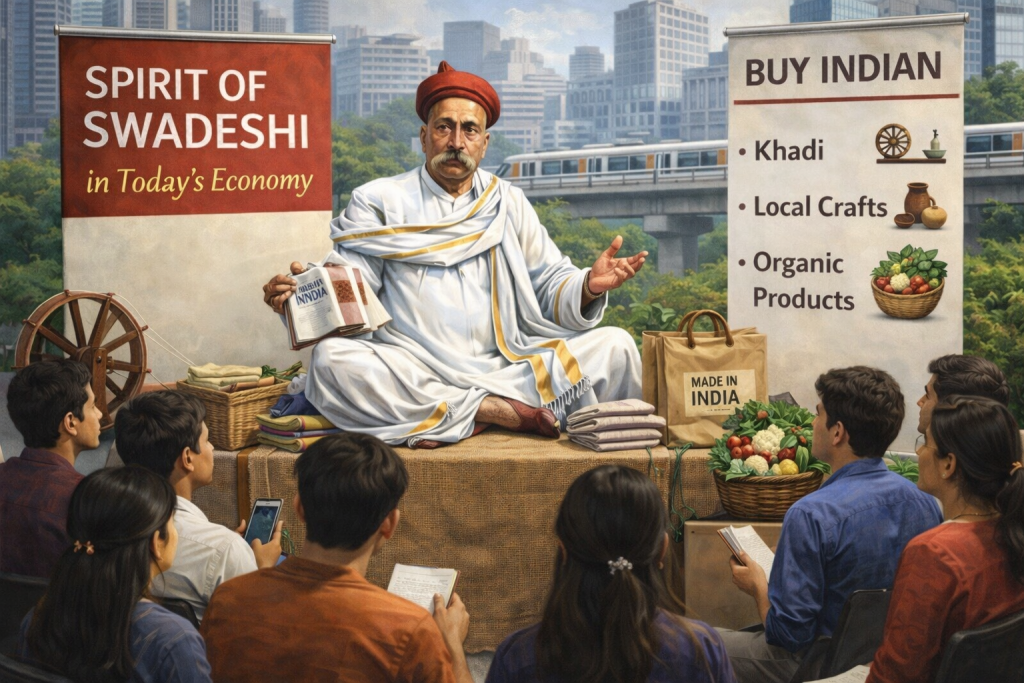
Spirit of Swadeshi in Today’s Economy
Reviving Tilak’s Swadeshi ideal through innovation, local enterprise, sustainability, and self-reliance to strengthen India’s economy in a modern global marketplace.
The essence of Swadeshi, championed by Lokmanya Bal Gangadhar Tilak, remains deeply relevant in today’s economic landscape. While originally focused on rejecting foreign goods and strengthening Indian industry during colonial rule, the modern interpretation highlights building self-reliance through innovation, entrepreneurship, and sustainable local production.
Today, Swadeshi encourages supporting Indian startups, MSMEs, rural industries, and indigenous technologies as pathways to national economic strength. It promotes ethical consumption, responsible manufacturing, and economic empowerment of local communities. In a globalized world, the true spirit of Swadeshi means balancing international trade with strong domestic capability and pride in homegrown excellence.
Tilak’s message continues to inspire movements such as Make in India, Atmanirbhar Bharat, digital entrepreneurship, and youth-led development—transforming economic independence into a reality for today’s generation.
Tilak’s Ideas in Current Political Thought
Tilak’s vision of Swaraj, civic responsibility, cultural unity, and ethical leadership continues to shape contemporary political debate and modern democratic governance in India.
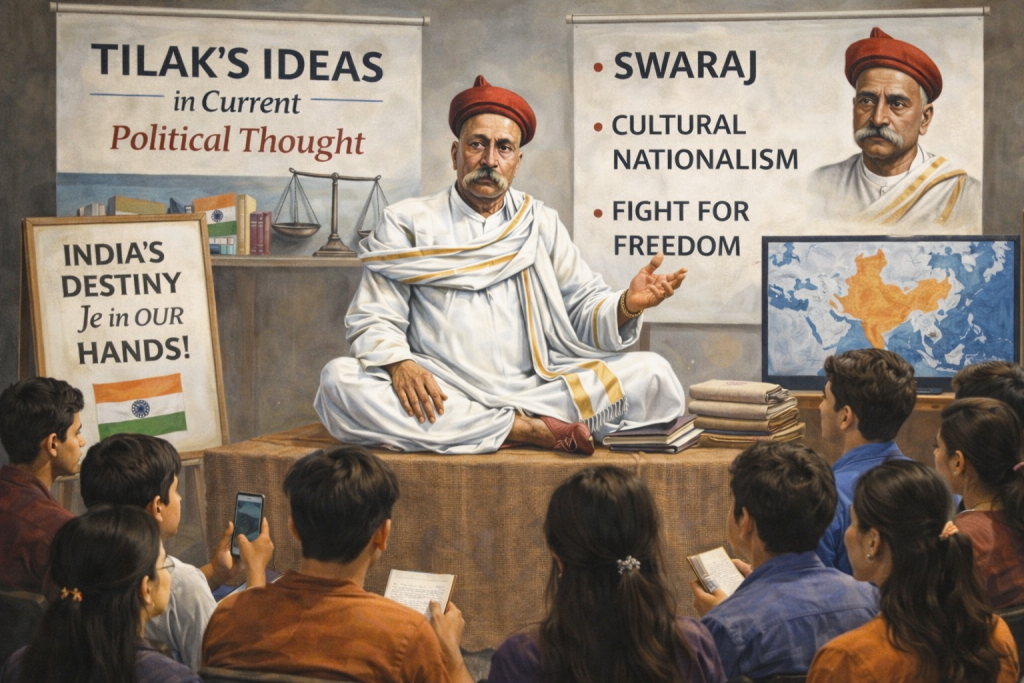
Lokmanya Bal Gangadhar Tilak’s political philosophy continues to influence modern governance, public policy, and democratic discourse in India. His belief that political freedom must be built upon social unity, national self-confidence, and cultural identity forms the foundation of contemporary nationalist thinking. Tilak argued that an empowered civil society, strong youth participation, and transparent leadership are essential for a successful democratic nation—principles still central to political debate today.
His vision of Swaraj extended beyond the removal of foreign rule; it called for decentralization, public accountability, and citizen-driven progress. Many modern policies promoting self-reliant development, social mobilization, and national integration reflect the ideals he championed over a century ago. Tilak’s fearless journalism, mass movement strategy, use of cultural symbolism, and ethical political philosophy continue to shape contemporary political thought and leadership values, making his ideas deeply relevant in today’s evolving democracy.